

Fuel Dilution
A significant threat to diesel engines.
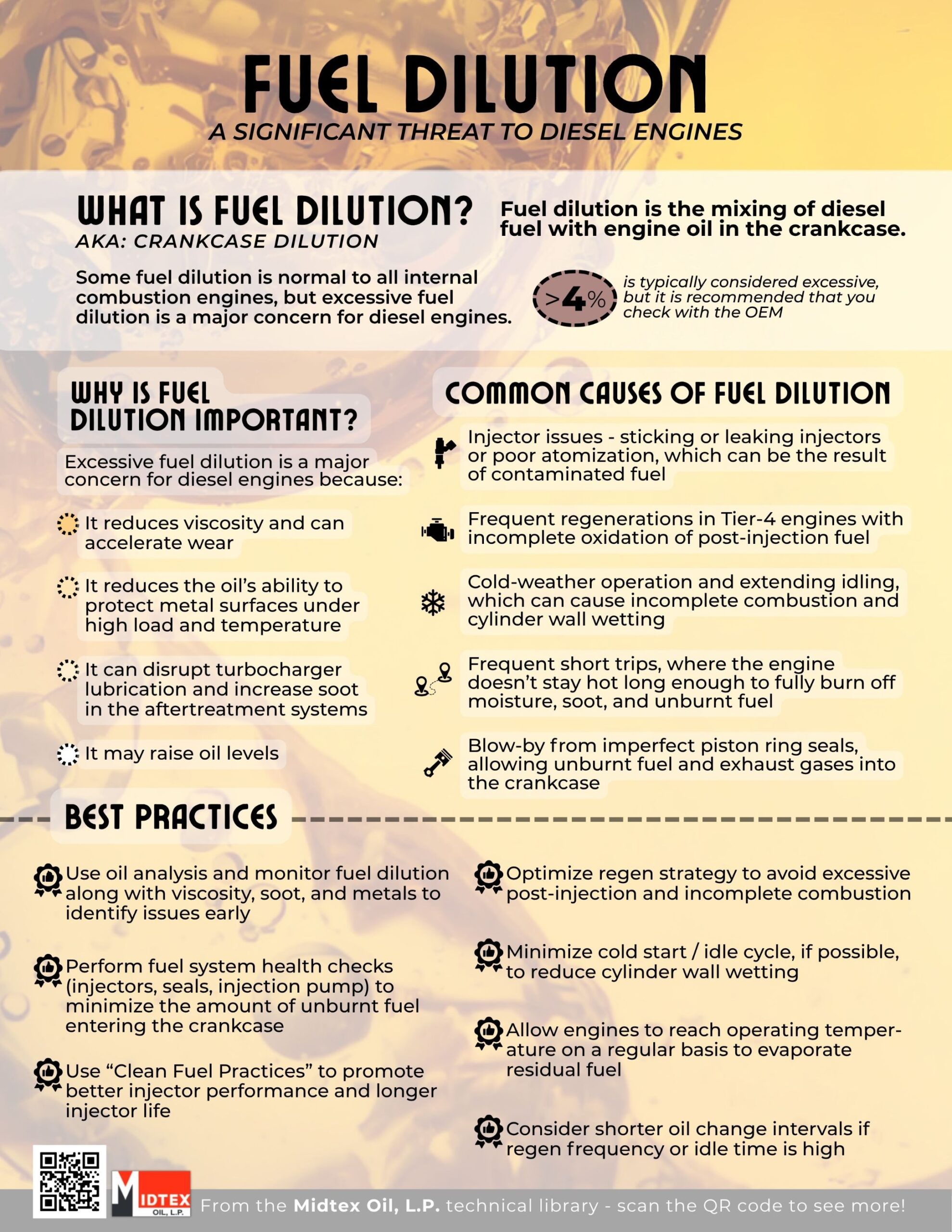
What Is Fuel Dilution?
Also known as: Crankcase dilution
Fuel dilution occurs when diesel fuel mixes with the engine oil in the crankcase. Some fuel dilution is normal in all internal combustion engines, but excessive fuel dilution is a major concern for diesel engines. Fuel dilution above 4% is typically considered excessive, but it is always best to confirm the acceptable limit with the original equipment manufacturer (OEM).
Why Is Fuel Dilution Important?
Excessive fuel dilution is a major concern for diesel engines because:
- It reduces viscosity and can accelerate wear.
- It reduces the oil’s ability to protect metal surfaces under high loads and temperatures.
- It can disrupt turbocharger lubrication and increase soot in aftertreatment systems.
- It may cause the oil level to rise.
Common Causes of Fuel Dilution
- Injector issues: Sticking or leaking injectors and poor fuel atomization can allow unburned fuel to enter the crankcase. These problems may result from contaminated fuel.
- Frequent regenerations: In Tier 4 engines, incomplete oxidation of post-injection fuel during frequent regeneration cycles can contribute to fuel dilution.
- Cold-weather operation and extended idling: These conditions can cause incomplete combustion and cylinder-wall wetting.
- Frequent short trips: The engine may not remain hot long enough to fully burn off moisture, soot, and unburned fuel.
- Blow-by: Imperfect piston-ring seals can allow unburned fuel and exhaust gases to enter the crankcase.
Best Practices to Minimize Fuel Dilution
- Use oil analysis: Monitor fuel dilution along with viscosity, soot, and wear metals to identify developing issues early.
- Perform fuel-system health checks: Inspect injectors, seals, and the injection pump to minimize the amount of unburned fuel entering the crankcase.
- Follow clean-fuel practices: Keeping fuel clean promotes better injector performance and longer injector life.
- Optimize the regeneration strategy: Avoid excessive post-injection and incomplete combustion.
- Minimize cold-start and idle cycles: When possible, reduce these operating conditions to limit cylinder-wall wetting.
- Reach operating temperature regularly: Allow engines to reach their normal operating temperature so residual fuel can evaporate.
- Consider shorter oil-change intervals: Shorter intervals may be appropriate when regeneration frequency or idle time is high.