

Bulk Lubricant Tank Audit
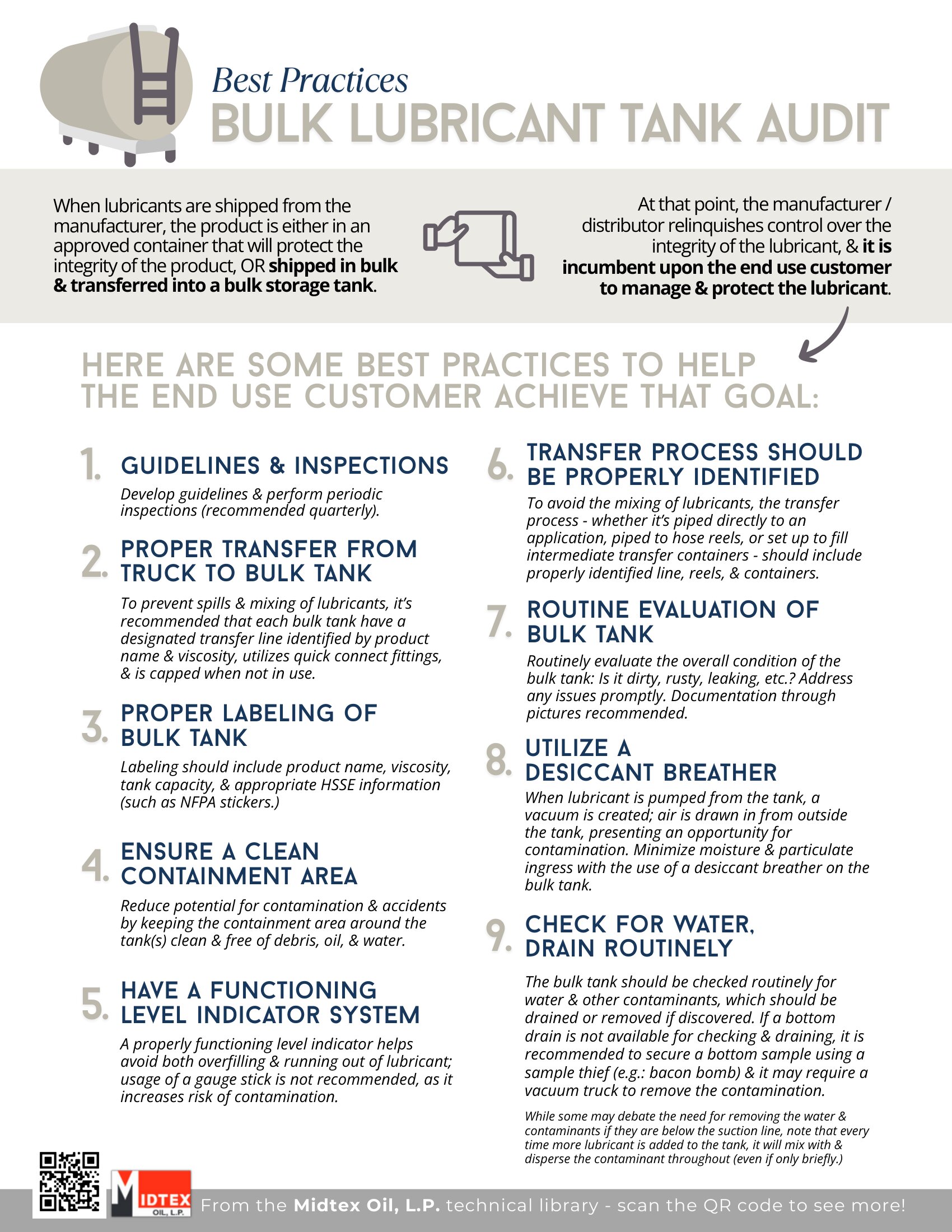
When lubricants are shipped from the manufacturer, the product is either in an approved container that will protect the integrity of the product, OR it is shipped in bulk and transferred into a bulk storage tank. At that point in time, the manufacturer/distributor relinquishes control over the integrity of the lubricant, and it is incumbent upon the end-use customer to manage and protect the lubricant. Here are some of best practices to help the end-use customer achieve that goal:
1. Guidelines and Inspections
Develop guidelines and perform periodic inspections (recommended quarterly).
2. Proper Transfer from Truck to Bulk Tank
To prevent spills and mixing of lubricants, it’s recommended that each bulk tank have a designated transfer line identified by product name and viscosity, utilizes quick connect fittings, and is capped when not in use.
3. Proper Labeling of Bulk Tank
Labeling should include product name, viscosity, tank capacity, and appropriate HSSE information (such as NFPA stickers.)
4. Ensure a Clean Containment Area
Reduce potential for contamination and accidents by keeping the containment area around the tank(s) clean and free of debris, oil, and water.
5. Have a Functioning Level Indicator System
A properly functioning level indicator helps avoid both overfilling and running out of lubricant; usage of a gauge stick is not recommended, as it increases risk of contamination.
6. Transfer Process Should Be Properly Identified
To avoid the mixing of lubricants, the transfer process – whether it’s piped directly to an application, piped to hose reels, or set up to fill intermediate transfer containers – should include properly identified line, reels, and containers.
7. Routine Evaluation of Bulk Tank
Routinely evaluate the overall condition of the bulk tank: Is it dirty, rusty, leaking, etc.? Address any issues promptly. Documentation through pictures recommended.
8. Utilize a Desiccant Breather
When lubricant is pumped from the tank, a vacuum is created: Air is drawn in from outside the tank, presenting an opportunity for contamination. Minimize moisture and particulate ingress with the use of a desiccant breather on the bulk tank.
9. Check for Water, Drain Routinely
The bulk tank should be checked routinely for water and other contaminants, which should be drained or removed if discovered. If a bottom drain is not available for checking and draining, it is recommended to secure a bottom sample using a sample thief (e.g.: bacon bomb) and it may require a vacuum truck to remove the contamination.
While some may debate the need for removing the water and contaminants if they are below the suction line, note that every time more lubricant is added to the tank, it will mix with and disperse the contaminant throughout (even if only briefly.)