


Ethanol Explained
Ethanol Explained
What exactly is ethanol?
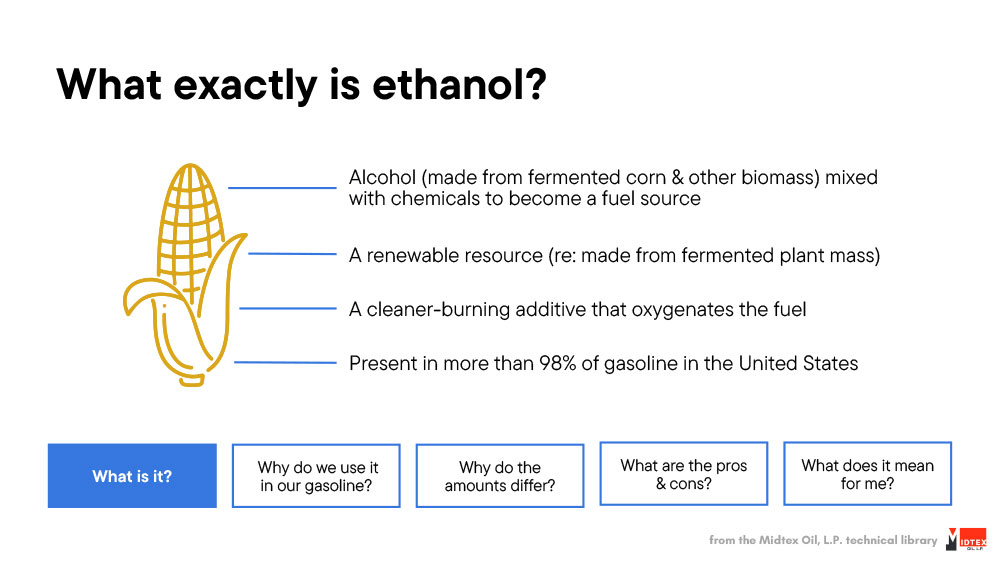
Ethanol is alcohol made from fermented corn and other biomass, mixed with chemicals to become a cleaner-burning additive that oxygenates fuel. It’s a renewable resource, and it is present in more than 98% of gasoline in the United States.
Why do we use it in our gasoline?
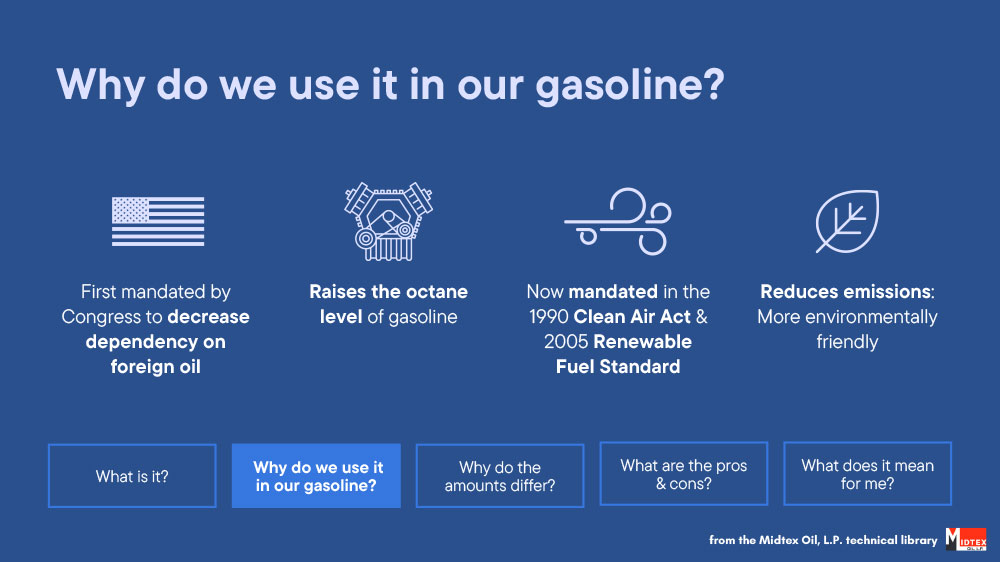
- Because it’s mandated: It was first mandated by Congress to decrease dependency on foreign oil, and is now mandated in the 1990 Clean Air Act and 2005 Renewable Fuel Standard.
- Because it raises the octane level of gasoline
- Because it reduces emissions, increasing environmental friendliness
Why do the amounts differ?
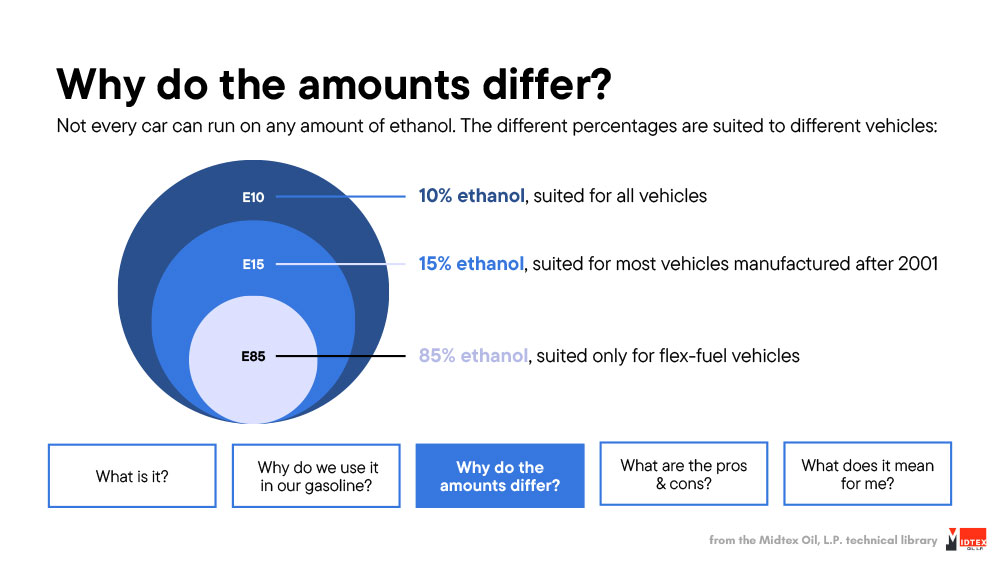
Not every car can run on any amount of ethanol. The different percentages are suited to different vehicles:
- 10% ethanol is suited for all vehicles
- 15% ethanol is suited for most vehicles manufactured after 2001
- 85% ethanol is suited only for flex-fuel vehicles
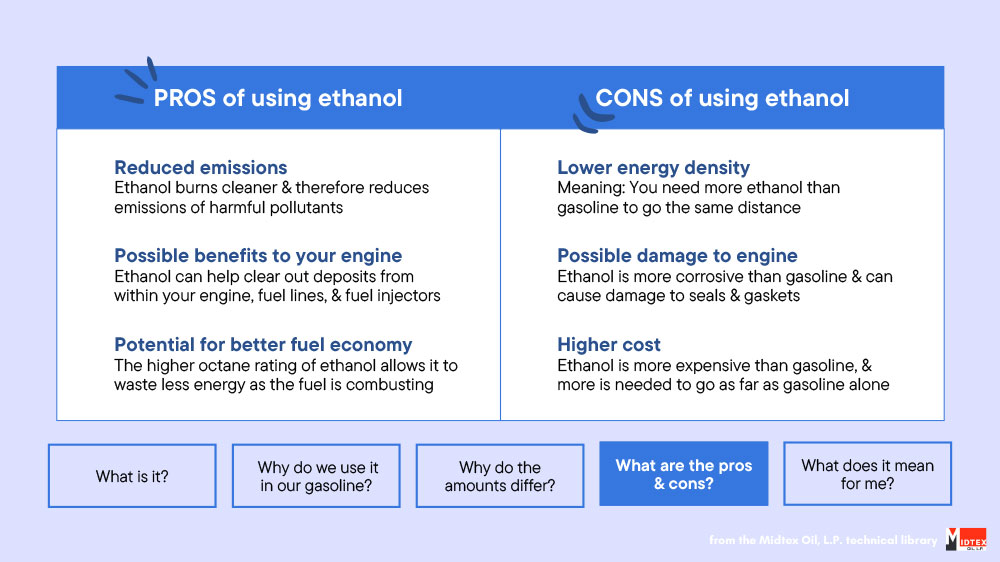
Pros of using ethanol
- Reduced emissions: Ethanol burns cleaner and therefore reduces emissions of harmful pollutants
- Possible benefits to your engine: Ethanol can help clear out deposits from within your engine, fuel lines, and fuel injectors
- Potential for better fuel economy: The higher octane rating of ethanol allows it to waste less energy as the fuel is combusting
Cons of using ethanol
- Lower energy density: Meaning: You need more ethanol than gasoline to go the same distance
- Possible damage to engine: Ethanol is more corrosive than gasoline and can cause damage to seals and gaskets
- Higher cost: Ethanol is more expensive than gasoline, and more is needed to go as far as gasoline alone
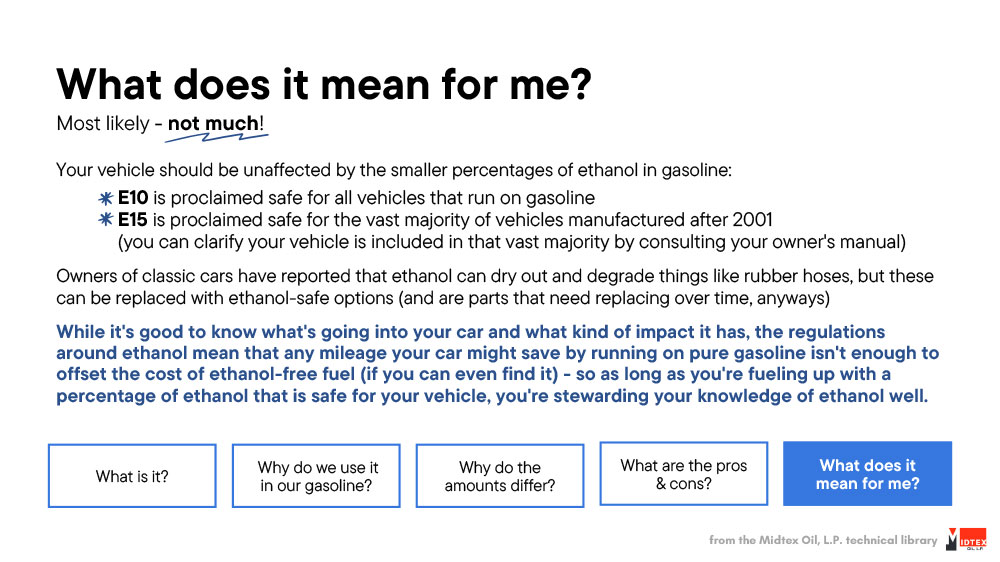
What does it mean for me?
Most likely – not much!
Your vehicle should be unaffected by the smaller percentages of ethanol in gasoline, E10 (proclaimed safe for all vehicles that run on gasoline) and E15 (proclaimed safe for the vast majority of vehicles manufactured after 2001 – you can clarify if your vehicle is included in that vast majority by consulting your owner’s manual.)
Owners of classic cars have reported that ethanol can dry out and degrade things like rubber hoses, but these can be replaced with ethanol-safe options (and are parts that need replacing over time, anyways.)
While it’s good to know what’s going into your car and what kind of impact it has, the regulations around ethanol mean that any mileage your car might save by running on pure gasoline isn’t enough to offset the cost of ethanol-free fuel (if you can even find it) – so as long as you’re fueling up with a percentage of ethanol that is safe for your vehicle, you’re stewarding your knowledge of ethanol well.