

Routine Oil Analysis
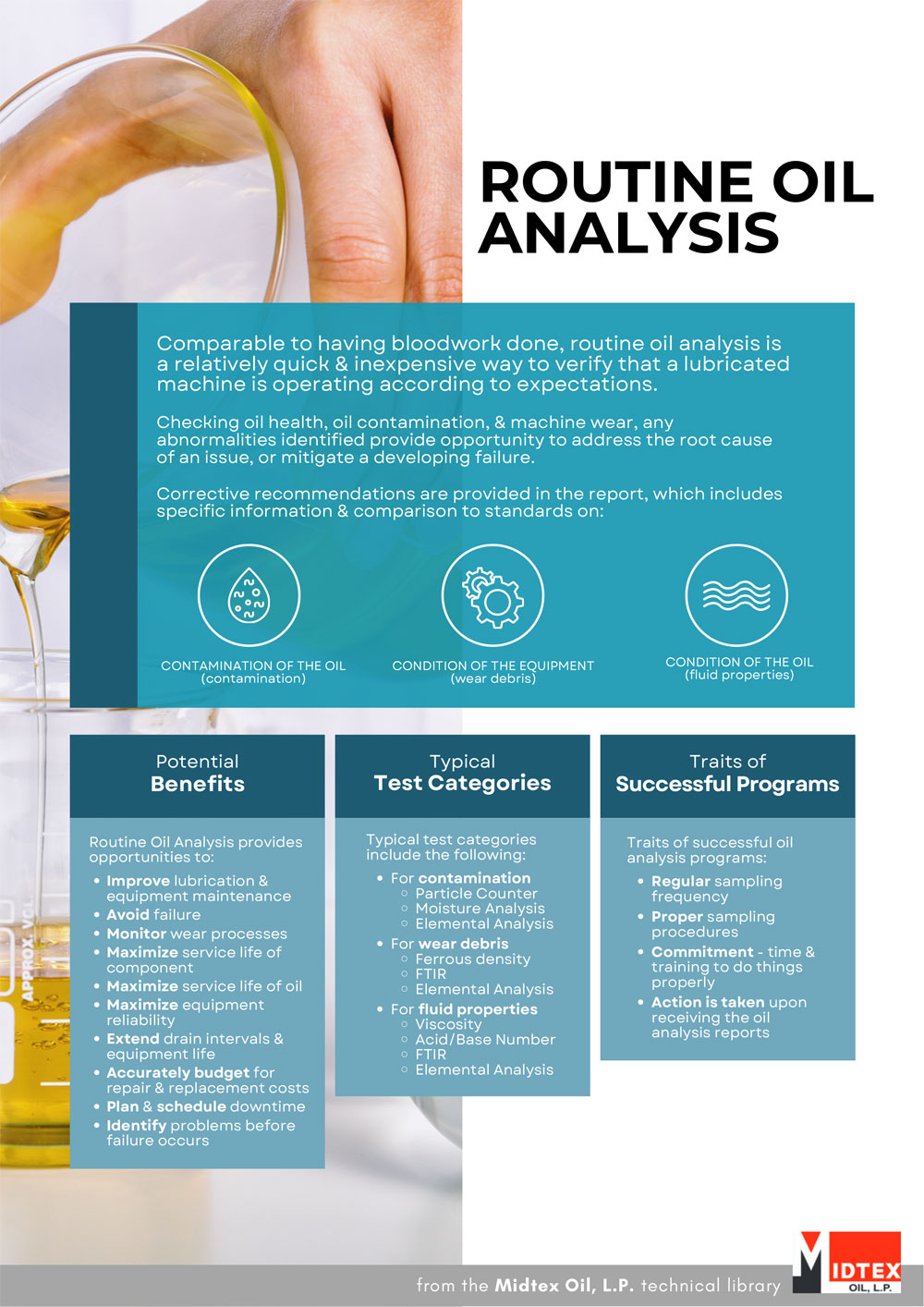
Comparable to having bloodwork done, routine oil analysis is a relatively quick and inexpensive way to verify that a lubricated machine is operating according to expectations.
Checking oil health, oil contamination, and machine wear, any abnormalities identified provide opportunity to address the root cause of an issue, or mitigate a developing failure.
Corrective recommendations are provided in the report, which includes specific information and comparison to standards on:
- Contamination of the oil (contamination)
- Condition of the equipment (wear debris)
- Condition of the oil (fluid properties)
Potential Benefits
Routine Oil Analysis provides opportunities to:
- Improve lubrication and equipment maintenance
- Avoid failure
- Monitor wear processes
- Maximize service life of component
- Maximize service life of oil
- Maximize equipment reliability
- Extend drain intervals and equipment life
- Accurately budget for repair and replacement costs
- Plan and schedule downtime
- Identify problems before failure occurs
Typical Test Categories
Typical test categories include the following:
- For contamination:
- Particle counter
- Moisture analysis
- Elemental analysis
- For wear debris:
- Ferrous density
- FTIR
- Elemental analysis
- For fluid properties:
- Viscosity
- Acid/base number
- FTIR
- Elemental analysis
Traits of Successful Programs
Traits of successful oil analysis programs:
- Regular sampling frequency
- Proper sampling procedures
- Commitment – time and training to do things properly
- Action is taken upon receiving the oil analysis reports