

5 Ways to Improve Your Lube Room
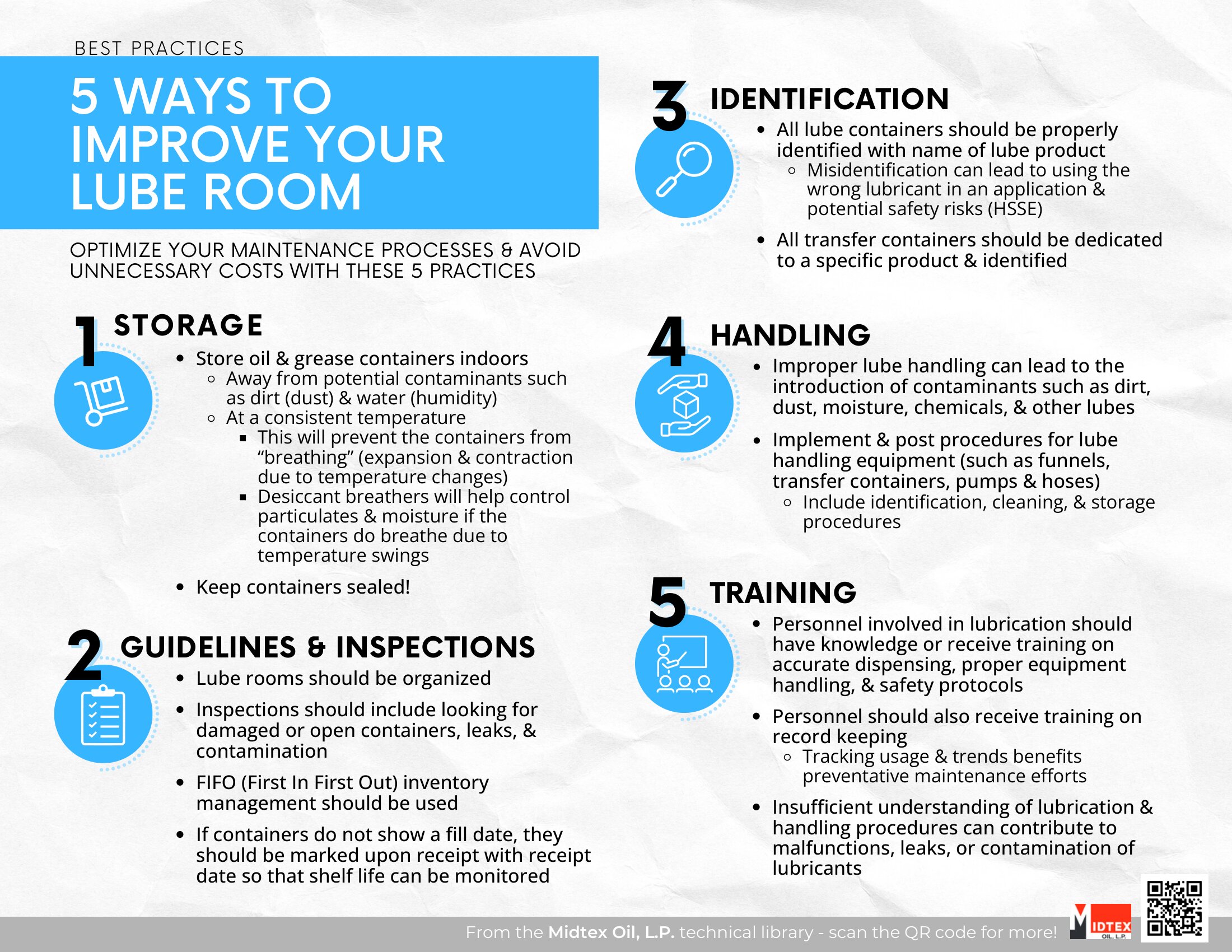
Optimize your maintenance processes and avoid unnecessary costs with these 5 practices!
1. Storage
Store oil and grease containers indoors, at a consistent temperature! This will prevent the containers from “breathing” (expansion and contraction due to temperature changes). You can use desiccant breathers to help control particulates and moisture if temperature swings do cause the containers to “breathe.”
It is also important that you keep the containers sealed, avoiding potential contaminants such as dirt (dust) and water (humidity).
2. Guidelines and Inspections
Lube rooms should be organized. FIFO (First In, First Out) inventory management should be used, and containers should be marked with a fill date. If they do not show a fill date, they should be marked upon receipt with receipt date so that the shelf life can be monitored.
Inspections should include looking for damaged or open containers, leaks, and contamination.
3. Identification
All lube containers should be properly identified with the name of the lube product, as misidentification can lead to using the wrong lubricant in an application, which introduces potential safety risks (HSSE).
All transfer containers should be dedicated to a specific product and identified accordingly.
4. Handling
Improper lube handling can lead to the introduction of contaminants such as dirt, dust, moisture, chemicals, and other lubricants. To facilitate proper lube handling, implement and post procedures for lube handling equipment (such as funnels, transfer containers, pumps, and hoses) and include procedures for identification, cleaning, and storage.
5. Training
Insufficient understanding of lubrication and handling procedures can contribute to malfunctions, leaks, or contamination of lubricants. You can lessen the likelihood of these issues by facilitating training on accurate dispensing, proper equipment handling, and safety protocols. Additionally, it’s a good idea to ensure everyone receives training on record keeping, as tracking usage and trends will benefit your preventative maintenance efforts in the long run.